How to Choose an Electrolyte Supplement

Choosing an electrolyte supplement is not simply a case of finding the product with the longest ingredient list or the highest number on the label.
Different products can provide very different amounts of sodium, other electrolytes, carbohydrate and additional ingredients, and they may be designed for very different types of training.
The most suitable option depends on what the person is using it for, how much they are likely to sweat, the duration and conditions of the session, their wider fuelling strategy and how practical the product is to use.
The aim should be to understand what the product actually provides per serving and whether that fits the demands of the training or event.
Do you need an electrolyte supplement?
Not necessarily.
For many shorter, easier or lower-sweat sessions, normal meals, water and everyday fluid intake may be sufficient.
An electrolyte supplement may become more relevant when:
- Exercise duration is prolonged
- Sweat losses are high
- Conditions are warm or humid
- Several training sessions are completed close together
- Recovery time is limited
- Meaningful fluid and sodium losses need to be replaced
- Normal food and fluid intake is delayed or restricted
This does not mean an electrolyte product is required in every one of these situations.
The decision should reflect the individual, the session and the conditions rather than assuming that every workout needs additional electrolytes. [1][2]
What should you look for in an electrolyte supplement?
The front of a product may use terms such as "hydration", "electrolytes" or "performance", but those words do not explain what the product actually contains.
A useful comparison starts with the label.
Look for:
- Sodium per serving
- Other declared electrolytes
- Carbohydrate content
- Additional ingredients
- Serving size
- Mixing instructions
- Product format
- Number of servings
- Practicality for the intended use
These points help show whether two products that appear similar on the front of the pack are actually providing similar formulas.
Why does sodium per serving matter?
Sodium is generally the main electrolyte lost through sweat, making it one of the most useful figures to compare between electrolyte products. [1][2]
Products can provide substantially different amounts of sodium per serving.
A higher sodium amount is not automatically better, and a lower amount is not automatically unsuitable.
The amount should be considered alongside:
- Expected sweat losses
- Exercise duration
- Temperature and humidity
- Fluid intake
- Sodium obtained from food or other drinks
- Recovery requirements
The important point is to compare the actual declared sodium amount rather than assuming that all products labelled as electrolytes provide a similar amount.
For a more detailed explanation of sodium and sweat losses, read Sodium and Exercise Hydration.
What about potassium, magnesium and calcium?
Electrolyte products may also provide potassium, magnesium and calcium alongside sodium.
These minerals all have physiological roles, but the presence of more types of electrolytes does not automatically make a product more suitable for exercise hydration.
When comparing products, look at the declared amount of each electrolyte rather than simply counting how many different minerals appear on the label.
A formula with sodium, potassium, magnesium and calcium is not automatically better than one with fewer electrolytes if the actual amounts and intended use are different.
The product should be judged as a complete formula rather than by the number of electrolyte names listed on the front of the pack.
For a basic explanation of the main electrolytes and their roles, read What Are Electrolytes?
Does carbohydrate content matter?
Yes, depending on how the product will be used.
Some electrolyte products contain meaningful amounts of carbohydrate, while others contain little or none.
A carbohydrate-electrolyte sports drink can contribute:
- Fluid
- Electrolytes
- Carbohydrate for fuelling
This may be useful during longer or more demanding endurance sessions where carbohydrate intake is also part of the plan.
A low-carbohydrate or carbohydrate-free electrolyte product allows hydration and carbohydrate fuelling to be managed separately.
In that situation, carbohydrate might come from:
- Gels
- Chews
- Bars
- Food
- Other sports nutrition products
Neither approach is automatically better.
The more suitable option depends on the demands of the session and whether the athlete wants one product to provide both fluid, electrolytes and carbohydrate, or prefers to manage those parts of the strategy separately. [3][4]
For longer endurance sessions, carbohydrate intake should be considered as part of the complete fuelling plan rather than judging an electrolyte product in isolation.
Does serving size matter?
Yes.
Products can use very different serving sizes, so the amount provided in one scoop, tablet or sachet should be checked carefully.
A product may appear to contain a high amount of an ingredient, but that figure may depend on:
- The size of the serving
- The number of scoops or tablets required
- How many servings are likely to be used
- The number of servings provided in the container
This is why comparing products using the declared amount per serving is more useful than looking only at the total amount contained in the tub or packet.
The serving instructions should also be realistic for the way the product is intended to be used.
What about additional ingredients?
Electrolyte products may contain ingredients in addition to sodium, potassium, magnesium and calcium.
These can include:
- Amino acids
- Vitamins
- Carbohydrates
- Sweeteners
- Flavourings
- Other active ingredients
The presence of additional ingredients does not automatically make an electrolyte product better for hydration.
Each ingredient should be considered separately and the declared amount should be checked rather than assuming that a longer ingredient list means a more complete product.
When comparing products, it can be useful to separate:
- The electrolytes
- The carbohydrate content
- Other active ingredients
- Flavouring and sweetening ingredients
This makes it easier to understand what the product is actually designed to provide.
Which product format is best?
Electrolyte supplements are available in several formats, including:
- Powders
- Tablets
- Capsules
- Sachets
- Ready-to-drink products
There is no single format that is automatically best.
The most suitable option depends on how and where the product will be used.
Useful considerations include:
- Ease of preparation
- Portability
- Access to water
- Bottle or shaker compatibility
- Ability to carry additional servings
- Convenience during longer sessions or events
- Cost per serving
- Taste and personal preference
Powders may be practical when preparing bottles before training or carrying additional servings for longer sessions.
Tablets can be convenient and portable, particularly when travelling or preparing drinks away from home.
Capsules can provide electrolytes without flavouring a drink, but fluid still needs to be consumed separately.
Ready-to-drink products can be convenient but may be less practical to carry in larger quantities.
Format should therefore be treated as a practical consideration rather than a measure of the quality of the electrolyte formula.
Why does label clarity matter?
A useful electrolyte label should make it easy to understand what the product provides.
Look for clearly declared information including:
- Serving size
- Sodium per serving
- Other electrolytes per serving
- Carbohydrate content
- Additional active ingredients
- Number of servings
- Directions for use
Products should be compared using these declared values rather than relying only on front-of-pack wording such as "hydration", "performance", "endurance" or "electrolytes".
Clear labelling also makes it easier to compare different products fairly and understand how the formula fits into a wider hydration or fuelling strategy.
Should the product match the type of training?
Yes.
The same electrolyte product does not need to be equally suitable for every session.
A shorter, easier or lower-sweat workout may require very little additional planning.
A longer, hotter or higher-sweat session may make fluid and sodium replacement more relevant.
Athletes should also consider whether:
- The session is prolonged
- Conditions are warm or humid
- Sweat losses are likely to be high
- Several sessions are being completed close together
- Recovery time is limited
- Carbohydrate is required during the session
- The product is practical to carry and use
The aim is not to find one electrolyte product that must be used for every workout.
It is to choose a product whose formula and format fit the situations where it is most likely to be useful.
How should you choose between electrolyte products?
A useful comparison should focus on what the product actually provides and how well it fits the intended use.
Consider:
- Sodium per serving
- Other electrolytes
- Carbohydrate content
- Additional ingredients
- Serving size
- Product format
- Label clarity
- Practicality
- Cost per serving
- How the product fits into the wider hydration and fuelling plan
Avoid choosing a product only because:
- It contains the most ingredients
- It has the highest sodium figure
- It uses the strongest front-of-pack claims
- It is marketed for a particular sport
- It appears more complex than another formula
The best choice depends on the individual, the session and the wider nutrition strategy.
For a more detailed side-by-side approach to comparing electrolyte formulas, read How to Compare Electrolyte Formulas.
Where does Hydration+ fit?
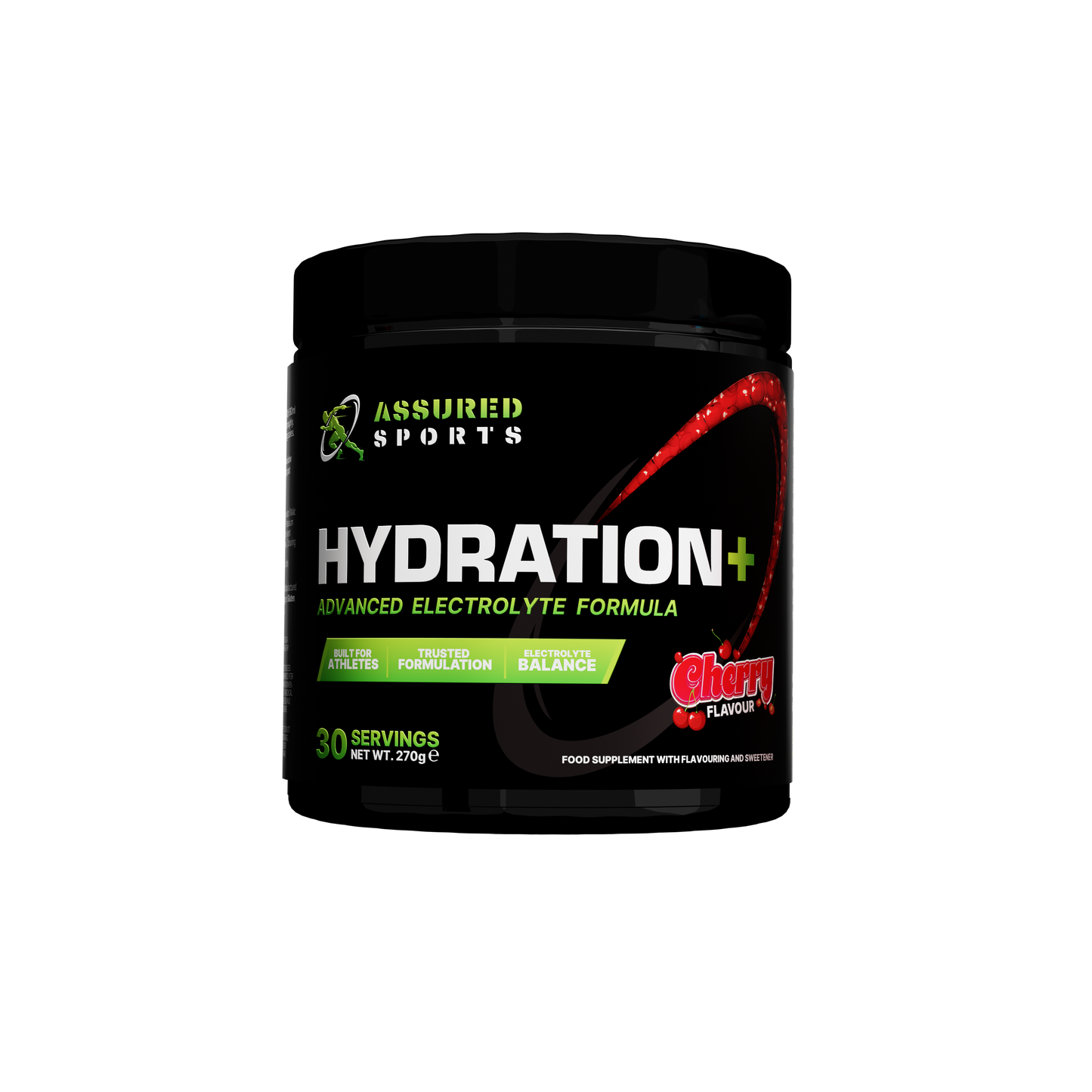
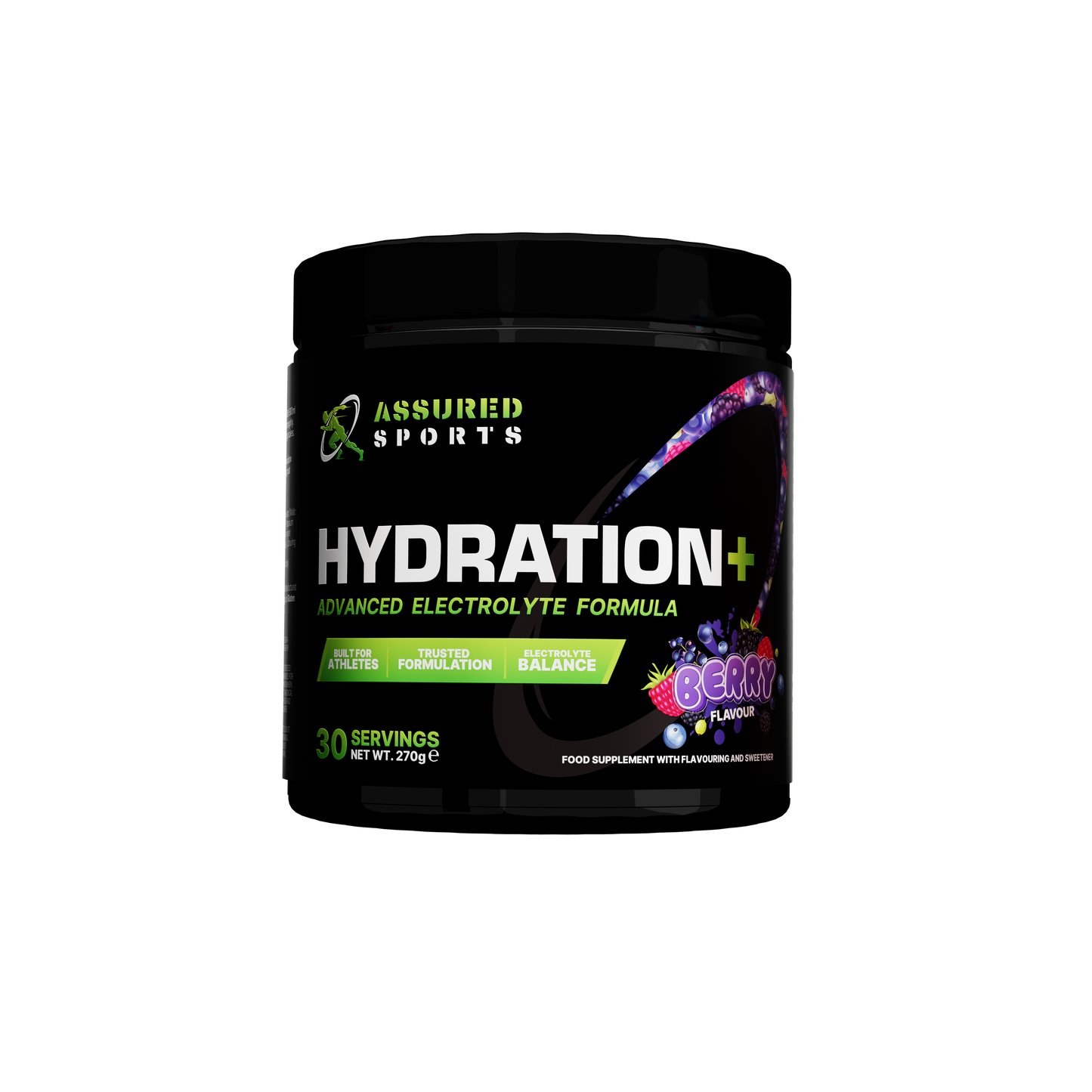
Assured Sports Hydration+ is a powdered electrolyte supplement designed to be mixed with water.
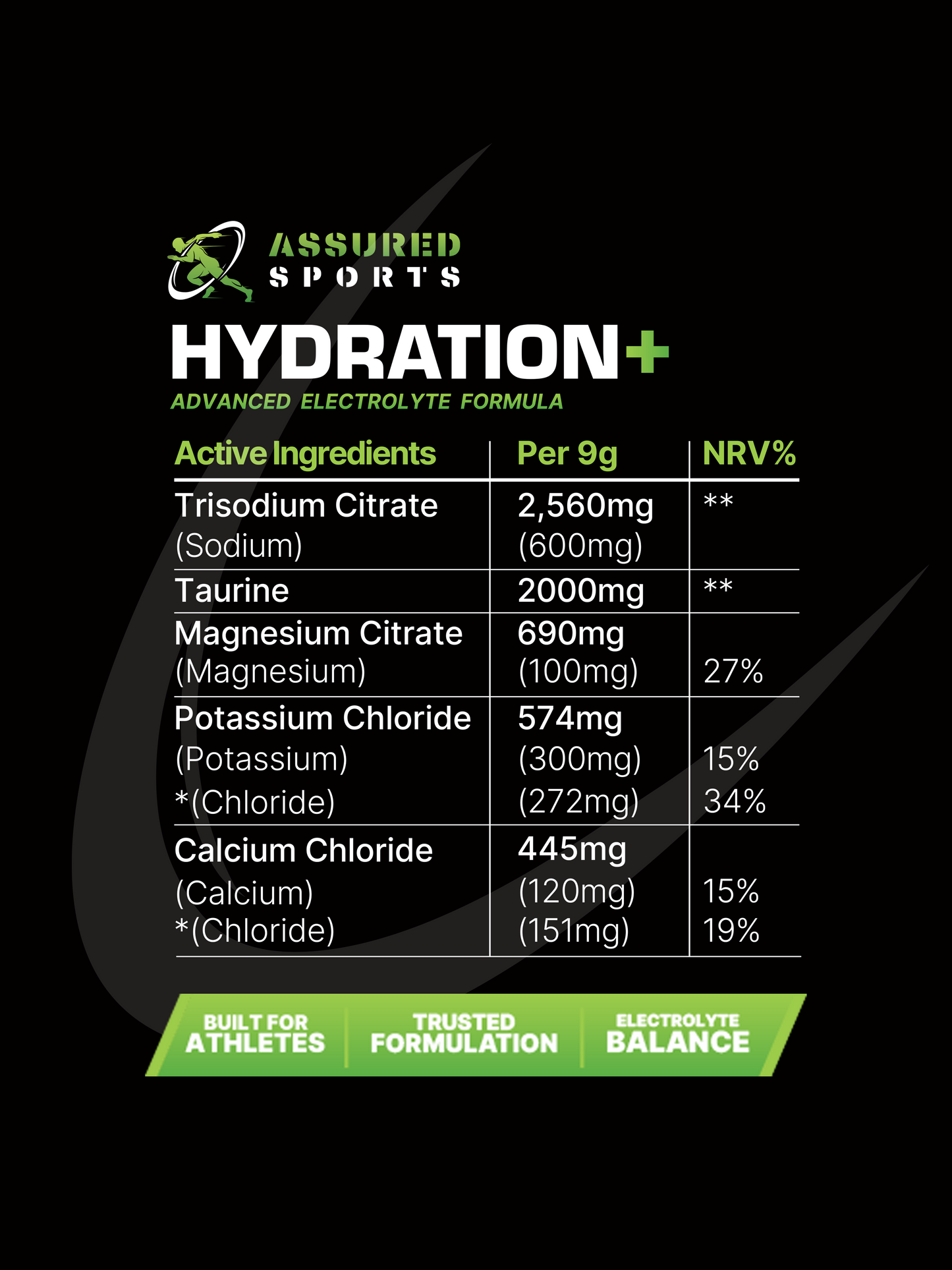
Each 9 g serving provides:
- 600 mg sodium
- 300 mg potassium
- 100 mg magnesium
- 120 mg calcium
- 2,000 mg taurine
Taurine is included as an additional ingredient and is not itself an electrolyte.
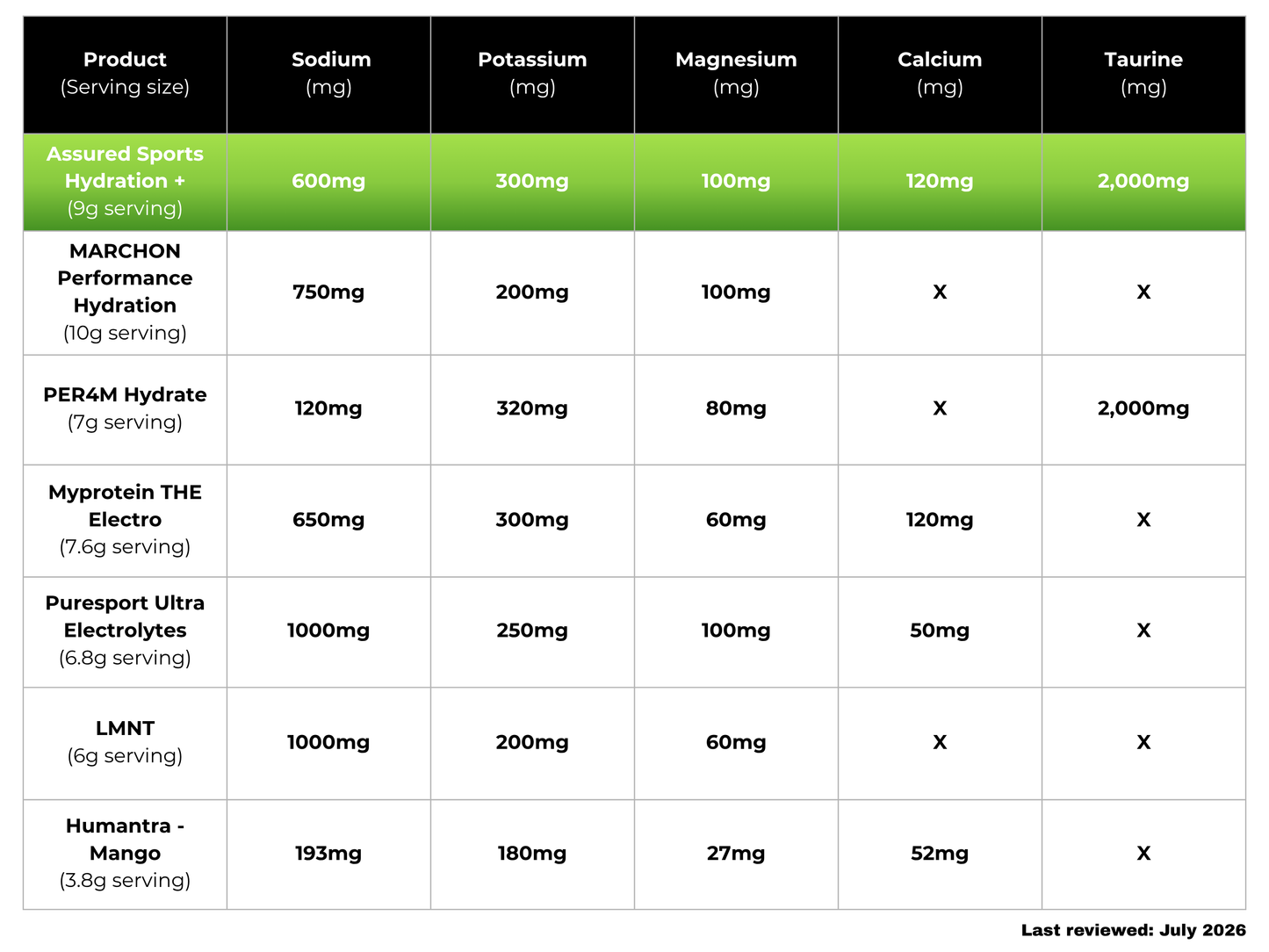
When comparing Hydration+ with other electrolyte supplements, the 600 mg sodium per serving is one of the main figures to consider alongside the other declared electrolytes and additional ingredients.
Hydration+ may be more relevant around longer, warmer, higher-sweat or repeated training sessions where fluid and electrolyte replacement requires greater consideration.
It is an electrolyte product rather than a carbohydrate fuelling product, which allows hydration and carbohydrate intake to be managed separately when required.
This may suit athletes who prefer to obtain carbohydrate from gels, chews, bars, food or other sports nutrition products while using an electrolyte drink as part of their hydration strategy.
Hydration+ should not be treated as automatically more suitable simply because it contains several electrolytes or a particular sodium amount.
Its suitability depends on the individual, the session, expected sweat losses, environmental conditions and the wider hydration and fuelling strategy.
View Assured Sports Hydration+
Key takeaways
- Not every workout requires an electrolyte supplement.
- Sodium per serving is one of the most useful figures to compare between products.
- More electrolytes or more ingredients do not automatically make a product better.
- Carbohydrate-containing sports drinks and electrolyte products do not always serve the same purpose.
- Serving size and label clarity matter when comparing products.
- Product format should suit the way the supplement will actually be used.
- A higher sodium amount is not automatically better for every person or session.
- The product should match the demands of the training, environmental conditions and wider fuelling strategy.
- Hydration and carbohydrate fuelling can be managed together or separately depending on the product and the athlete's needs.
- The most suitable electrolyte supplement depends on the individual and the intended use.
Related guides
For a basic explanation of the main electrolytes, read:
For more detail on fluid balance and rehydration, read:
How Do Electrolytes Help With Hydration?
For a closer look at sodium and sweat losses, read:
For a more detailed side-by-side approach to comparing electrolyte formulas, read:
How to Compare Electrolyte Formulas
For a comparison of electrolyte product formats, read:
Sources
[1] Baker LB. Sweating Rate and Sweat Sodium Concentration in Athletes: A Review of Methodology and Intra/Interindividual Variability. Sports Medicine. 2017;47(Suppl 1):111–128.
[2] McDermott BP, Anderson SA, Armstrong LE, et al. National Athletic Trainers' Association Position Statement: Fluid Replacement for the Physically Active. Journal of Athletic Training. 2017;52(9):877–895.
[3] Jeukendrup AE. Nutrition for Endurance Sports: Marathon, Triathlon, and Road Cycling. Journal of Sports Sciences. 2011;29(Suppl 1):S91–S99.
[4] Burke LM, Hawley JA, Wong SHS and Jeukendrup AE. Carbohydrates for Training and Competition. Journal of Sports Sciences. 2011;29(Suppl 1):S17–S27.