How Do Electrolytes Help With Hydration?

Electrolytes help with hydration by contributing to fluid balance and replacing minerals lost through sweat. Sodium is particularly relevant during exercise because it is generally the main electrolyte lost in sweat and plays an important role in the fluid outside the body's cells.
However, electrolytes do not hydrate the body without water, and an electrolyte drink is not automatically necessary for every workout. Its usefulness depends on factors including fluid and sodium losses, exercise duration, environmental conditions and the time available to recover.
What does hydration mean?
Hydration refers to the body's water balance rather than simply the amount of water someone drinks.
Water is continually gained through drinks, food and normal metabolic processes. It is also lost through urine, breathing, bowel movements and sweat.
Hydration status is therefore influenced by:
- How much fluid is consumed
- How much fluid is lost
- How water is distributed throughout the body
- How effectively the body retains or removes water
During exercise, sweat losses can temporarily shift this balance. The extent of that change varies considerably between people and sessions. [1][2]
How do electrolytes help regulate fluid balance?
Body water is distributed between fluid inside cells and fluid outside cells.
Electrolytes are dissolved throughout these fluids. Their concentration contributes to the movement and distribution of water between the body's fluid compartments.
Sodium and chloride are found mainly in fluid outside cells, while potassium is found mainly inside cells. Maintaining these differences is important for normal fluid balance, nerve signalling and muscle function. [6][7][8]
The body regulates water and electrolyte balance through connected mechanisms involving thirst, the kidneys and hormones. These mechanisms influence how much water is consumed, retained or removed. [1]
Why is sodium especially relevant to exercise hydration?
Sodium is generally the main electrolyte lost through sweat. It is therefore often the electrolyte given the most attention in sports hydration.
The total amount lost depends on both:
- How much someone sweats
- The sodium concentration of their sweat
Both factors vary considerably between athletes. They can also change with exercise intensity, environmental conditions and heat acclimatisation. [1][2]
Replacing sodium may become more relevant when sweat losses are substantial or when rapid rehydration is required before another training session or competition.
Research conducted after exercise-induced dehydration shows that the sodium content of a drink can influence how much of the consumed fluid is retained. However, the effect also depends on the amount of fluid consumed and the wider recovery strategy. [3][4]
Do electrolytes help the body retain fluid?
Under some conditions, sodium can help the body retain more of the fluid consumed during rehydration.
After exercise-induced dehydration, drinking a large volume of plain water can increase urine production before all the fluid and sodium lost through sweat have been replaced.
Research has shown that including sodium in a rehydration drink can reduce urine losses and improve fluid retention compared with water alone. The result depends on several factors, including:
- The amount of sodium in the drink
- The total volume consumed
- The amount of fluid and sodium previously lost
- Whether food is consumed during recovery
- The length of the recovery period
This does not mean that adding more sodium will always produce a better result. Hydration strategies should reflect the individual's losses and recovery requirements rather than using the highest possible electrolyte dose. [3][4]
Is water enough for hydration?
In many situations, yes.
Water, normal meals and ordinary daily fluid intake may be sufficient when sweat losses are relatively low and there is enough time to eat, drink and recover normally.
An electrolyte drink may offer little additional benefit during a short or low-sweat session if the person begins adequately hydrated and will soon eat a normal meal.
Water alone may become less suitable as a recovery option when substantial fluid and sodium losses need to be replaced quickly. In those circumstances, fluid containing sodium or fluid consumed alongside sodium-containing food may support better fluid retention. [1][3][4]
When might an electrolyte drink be useful?
An electrolyte drink may become more useful when:
- Exercise is prolonged
- Training takes place in hot or humid conditions
- An individual has a high sweat rate
- Sweat and sodium losses are substantial
- Several sessions are completed within a short period
- There is limited time to rehydrate before the next session
- Normal meals and fluids are not immediately available
These are considerations rather than universal rules. Two people completing the same session can lose different amounts of fluid and sodium, so they may not require the same hydration strategy. [1][2]
Do all electrolytes contribute equally to exercise hydration?
No.
Sodium usually receives the most attention in exercise hydration because it is generally the main electrolyte lost through sweat and has an important role in extracellular fluid balance.
Potassium, magnesium, calcium and chloride also have important physiological roles. However, their presence on a product label does not mean they each contribute equally to replacing the main electrolyte losses caused by sweating.
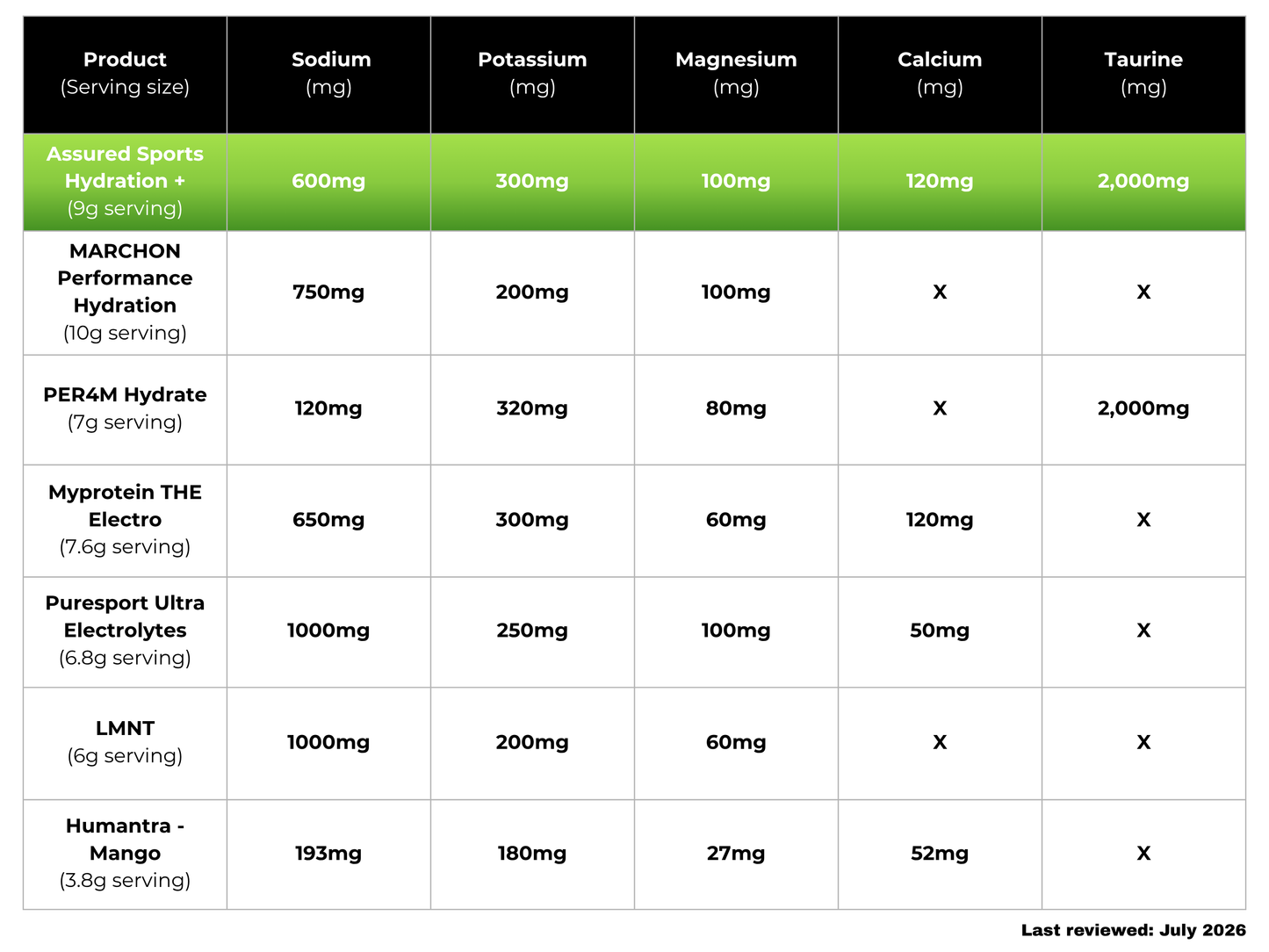
When comparing electrolyte products, the amounts provided per serving are more informative than simply counting how many different electrolytes appear in the formula.
Can electrolytes prevent dehydration?
Electrolytes cannot prevent dehydration without sufficient fluid intake.
They can contribute to replacing minerals lost through sweat and, particularly in the case of sodium, may support fluid retention during rehydration. They do not remove the need to drink an appropriate amount of fluid.
Consuming excessive fluid can also be problematic. A sensible hydration strategy should aim to avoid both substantial under-replacement and overdrinking. [1][5]
Where does Hydration+ fit?
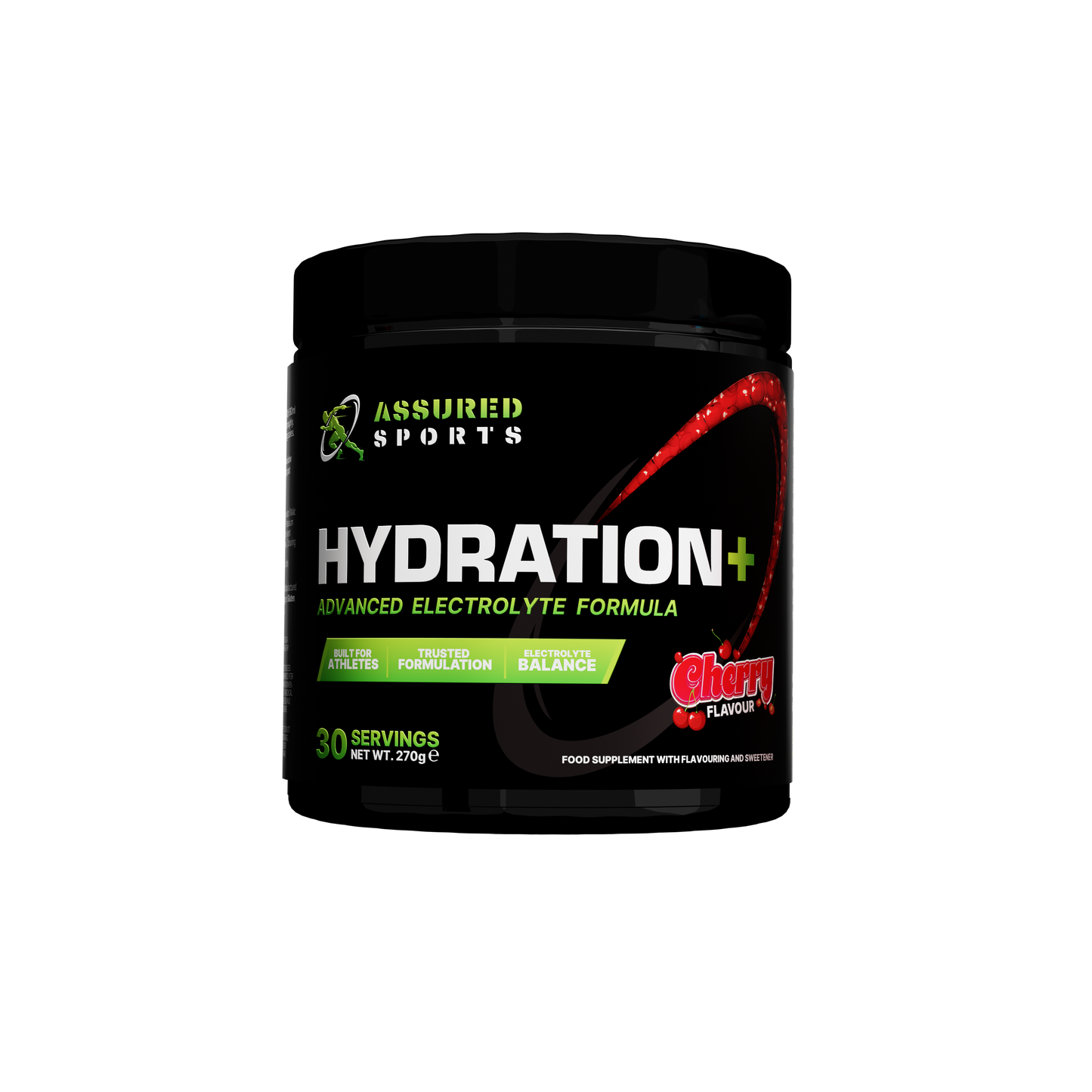
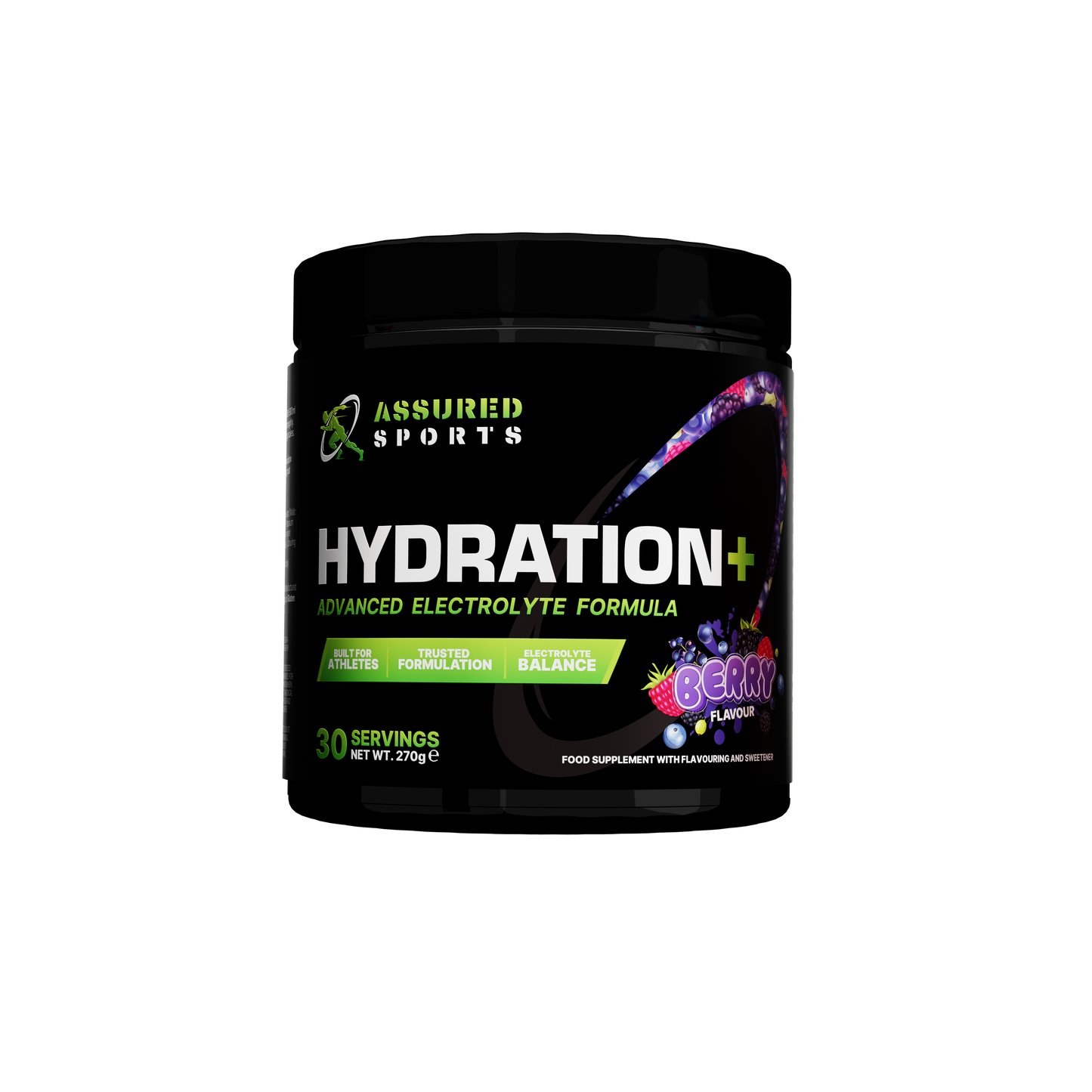
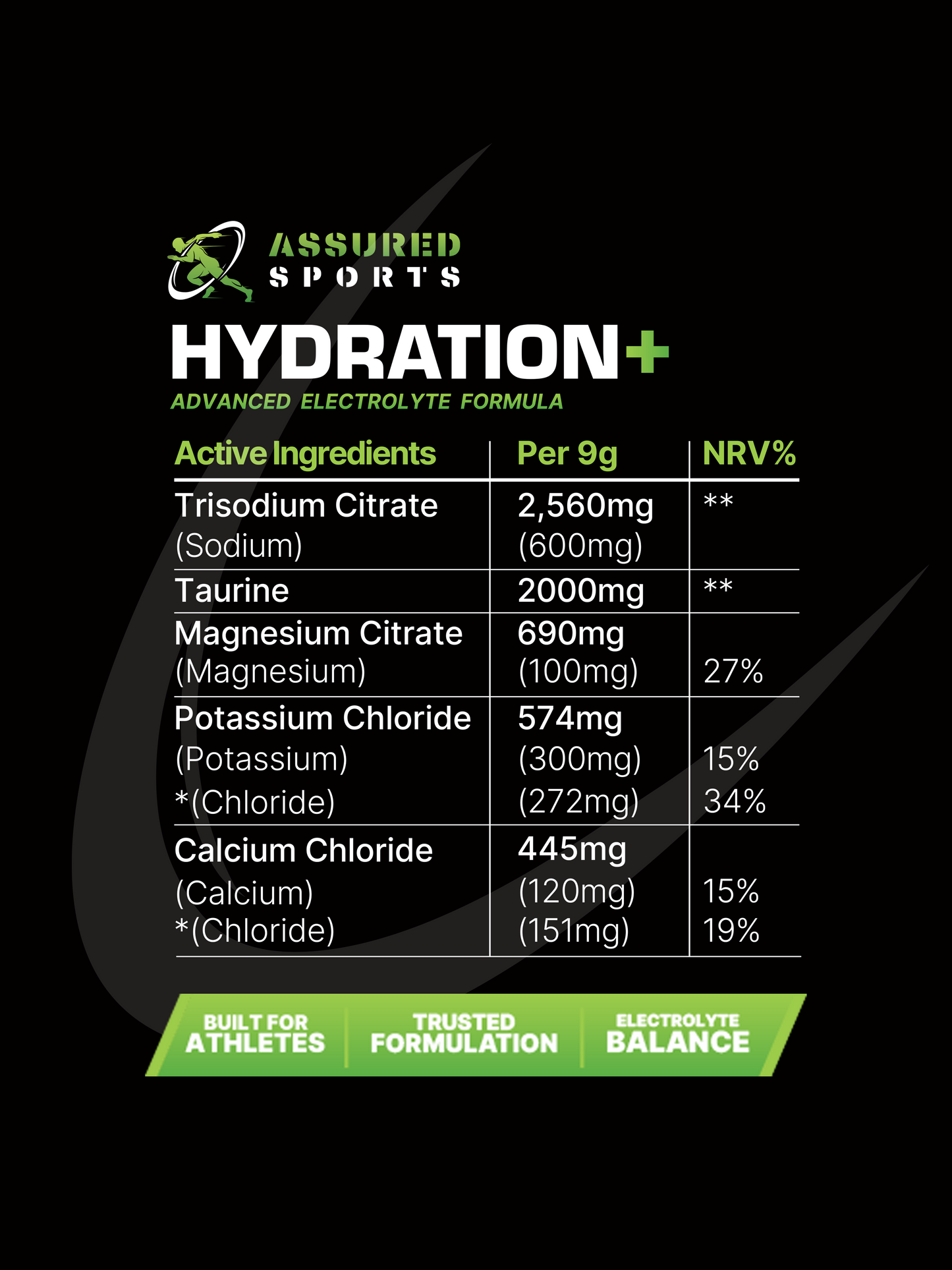
Assured Sports Hydration+ is a powdered electrolyte supplement designed to be mixed with water. It provides clearly declared amounts of sodium, potassium, magnesium and calcium, alongside taurine.
Each 9 g serving provides:
- 600 mg sodium
- 300 mg potassium
- 100 mg magnesium
- 120 mg calcium
- 2,000 mg taurine
Taurine is included as an additional ingredient and is not itself an electrolyte.
Hydration+ does not remove the need to consume sufficient fluid and is not necessary for every workout. It may be considered around prolonged, hot, high-sweat or repeated sessions where replacing fluid and electrolytes is more relevant.
Individual requirements still vary, and the product's declared amounts should be considered alongside the session, environmental conditions, sweat losses and wider diet.
View Assured Sports Hydration+
Key takeaways
- Hydration reflects the balance between fluid gained, fluid lost and how water is distributed throughout the body.
- Electrolytes contribute to the regulation and distribution of body fluids.
- Sodium is especially relevant during exercise because it is generally the main electrolyte lost through sweat.
- Sodium-containing drinks may improve fluid retention during post-exercise rehydration under some conditions.
- Water and normal meals may be sufficient when sweat losses are relatively low and recovery time is not restricted.
- Electrolyte requirements vary, and neither under-drinking nor excessive fluid intake is desirable.
- Electrolytes do not hydrate the body without sufficient fluid.
Related guide
For a broader introduction to sodium, potassium, chloride, magnesium and calcium, read:
Sources
- McDermott BP, Anderson SA, Armstrong LE, et al. National Athletic Trainers' Association Position Statement: Fluid Replacement for the Physically Active. Journal of Athletic Training. 2017;52(9):877–895.
- Baker LB. Sweating Rate and Sweat Sodium Concentration in Athletes: A Review of Methodology and Intra/Interindividual Variability. Sports Medicine. 2017;47(Suppl 1):111–128.
- Shirreffs SM, Taylor AJ, Leiper JB and Maughan RJ. Post-exercise rehydration in man: effects of volume consumed and drink sodium content. Medicine & Science in Sports & Exercise. 1996;28(10):1260–1271.
- Evans GH, James LJ, Shirreffs SM and Maughan RJ. Optimizing the restoration and maintenance of fluid balance after exercise-induced dehydration. Journal of Applied Physiology. 2017;122(4):945–951.
- Hew-Butler T, Rosner MH, Fowkes-Godek S, et al. Statement of the Third International Exercise-Associated Hyponatremia Consensus Development Conference, Carlsbad, California, 2015. Clinical Journal of Sport Medicine. 2015;25(4):303–320.
- European Food Safety Authority. Dietary Reference Values for Sodium. EFSA Journal. 2019;17(9):5778.
- European Food Safety Authority. Dietary Reference Values for Potassium. EFSA Journal. 2016;14(10):4592.
- European Food Safety Authority. Dietary Reference Values for Chloride. EFSA Journal. 2019;17(9):5779.