Electrolytes for Running

Runners can lose water and electrolytes through sweat, but that does not mean every run requires an electrolyte product.
Whether electrolytes are useful depends on the runner, the session and the conditions. Run duration, exercise intensity, temperature, humidity, individual sweat losses and the time available for recovery can all influence the decision.
When comparing electrolyte products, runners should therefore consider what they are preparing for rather than assuming that the same drink is suitable for every distance or training session.
Do runners need electrolytes for every run?
Not necessarily.
Water, ordinary meals and normal daily fluid intake may be sufficient for many shorter, easier or lower-sweat runs.
An electrolyte product may become more relevant when:
- Running duration is longer
- Conditions are warm or humid
- Sweat losses are high
- The runner has a relatively high sweat sodium concentration
- Several training sessions are completed close together
- There is limited time to eat, drink and recover
- Meaningful fluid and sodium losses need to be replaced
These are considerations rather than fixed rules. Two runners completing the same route can experience different sweat and sodium losses, and the same runner's losses can change between sessions. [1][2][3]
How do distance and duration affect the decision?
Distance can provide some context, but distance alone does not determine whether a runner needs electrolytes.
The time taken to complete a distance can vary considerably. The weather, pace, terrain, clothing and individual sweat response can also change the demands of the run.
A fast runner and a slower runner completing the same distance may spend very different amounts of time exercising. Their opportunities to drink, total sweat losses and recovery requirements may therefore be different.
Duration and conditions are often more useful than distance alone when deciding whether an electrolyte product is relevant. [3][4]
Shorter or easier runs
During a shorter, easier or lower-sweat run, the amount of fluid and sodium lost may be manageable through normal drinking and meals before and after training.
An electrolyte drink may offer little practical benefit when:
- The runner begins adequately hydrated
- Sweat losses are relatively low
- Conditions are mild
- A normal meal and fluids are available afterwards
- Another demanding session is not scheduled soon
This does not mean a product cannot be used. It means its contents should be compared against what the session actually requires.
Longer runs and races
As running duration increases, there is more time for fluid and sodium losses to accumulate.
Electrolytes may become more relevant during long runs or races when sweat losses are substantial, particularly in warm conditions or when the runner has limited opportunities to replace losses afterwards.
For longer events, runners may also need to consider carbohydrate intake. A carbohydrate-containing sports drink and a carbohydrate-free electrolyte product do not serve exactly the same purpose.
The product should therefore be considered as part of the runner's complete hydration and fuelling plan rather than assessed only by the number of electrolytes on its label. [3][4]
Repeated training sessions
A runner completing another session later that day—or early the following day—may have less time to restore fluid and sodium losses.
In this situation, post-run rehydration can become more important than it would be after the same run followed by a full day of normal eating and drinking.
The recovery window should therefore be considered when deciding whether water and meals are sufficient or whether a sodium-containing drink may be useful. [1][3]
How do temperature and humidity affect running hydration?
Running in warm or hot conditions increases thermal strain and commonly increases sweat losses.
Humidity can make sweat evaporation less effective. The body may continue producing sweat even though less of it evaporates from the skin and contributes to cooling.
Under these conditions, runners may experience greater fluid and electrolyte losses than they would during a similar run in cooler weather.
However, hot weather does not create one universal hydration requirement. Sweat rate, access to drinks, gastrointestinal tolerance, pace and heat acclimatisation still differ between runners.
A hydration strategy for warm conditions should be planned and practised rather than introduced for the first time on race day. [3][5]
Cool conditions do not eliminate the need to consider hydration. Long duration, heavy clothing or a naturally high sweat rate can still produce meaningful losses even when the weather does not feel hot.
Why do individual sweat losses matter?
Sweat rate and sweat sodium concentration vary considerably between runners.
Sweat rate describes the volume of sweat produced over a period of time. Sweat sodium concentration describes how much sodium is contained within that sweat. These are not the same thing, and a runner can have:
- A high sweat rate with a lower sweat sodium concentration
- A lower sweat rate with a higher sweat sodium concentration
- High values for both
- Relatively low values for both
Total sodium loss depends on the total volume of sweat lost and the sodium concentration of that sweat. Run duration influences how much sweat can accumulate over the session.
Studies involving runners have reported wide differences in sweat rate and sweat sodium concentration, even among people completing similar running sessions. [2][6]
Changes in body mass before and after a run, considered alongside fluid consumed and any urine produced, can help estimate sweat losses. This can provide useful context, but a result from one session should not be treated as a permanent requirement for every run.
For a more detailed explanation of sweat sodium losses and sodium replacement, read Sodium and Exercise Hydration.
What should runners compare in an electrolyte product?
The word “electrolytes” on the front of a product does not explain how much of each electrolyte it provides or whether the formula suits a particular run.
Runners should examine the full label, serving instructions and intended use rather than judging a product only by its name or the number of minerals listed. A useful label should allow the runner to identify the serving size, the amount of each electrolyte per serving, the recommended water volume, the carbohydrate content, any additional active ingredients and directions for use. Products should be compared using these declared values rather than relying only on front-of-pack wording such as “hydration”, “performance” or “electrolytes”.
The main comparison points include:
- Sodium provided per serving
- Intended water volume
- Number of servings required
- Carbohydrate content
- Other declared electrolytes
- Additional ingredients
- Product format
- Clarity of the label and mixing instructions
Sodium per serving
Sodium is generally the main electrolyte lost through sweat, making it an important comparison point for runners.
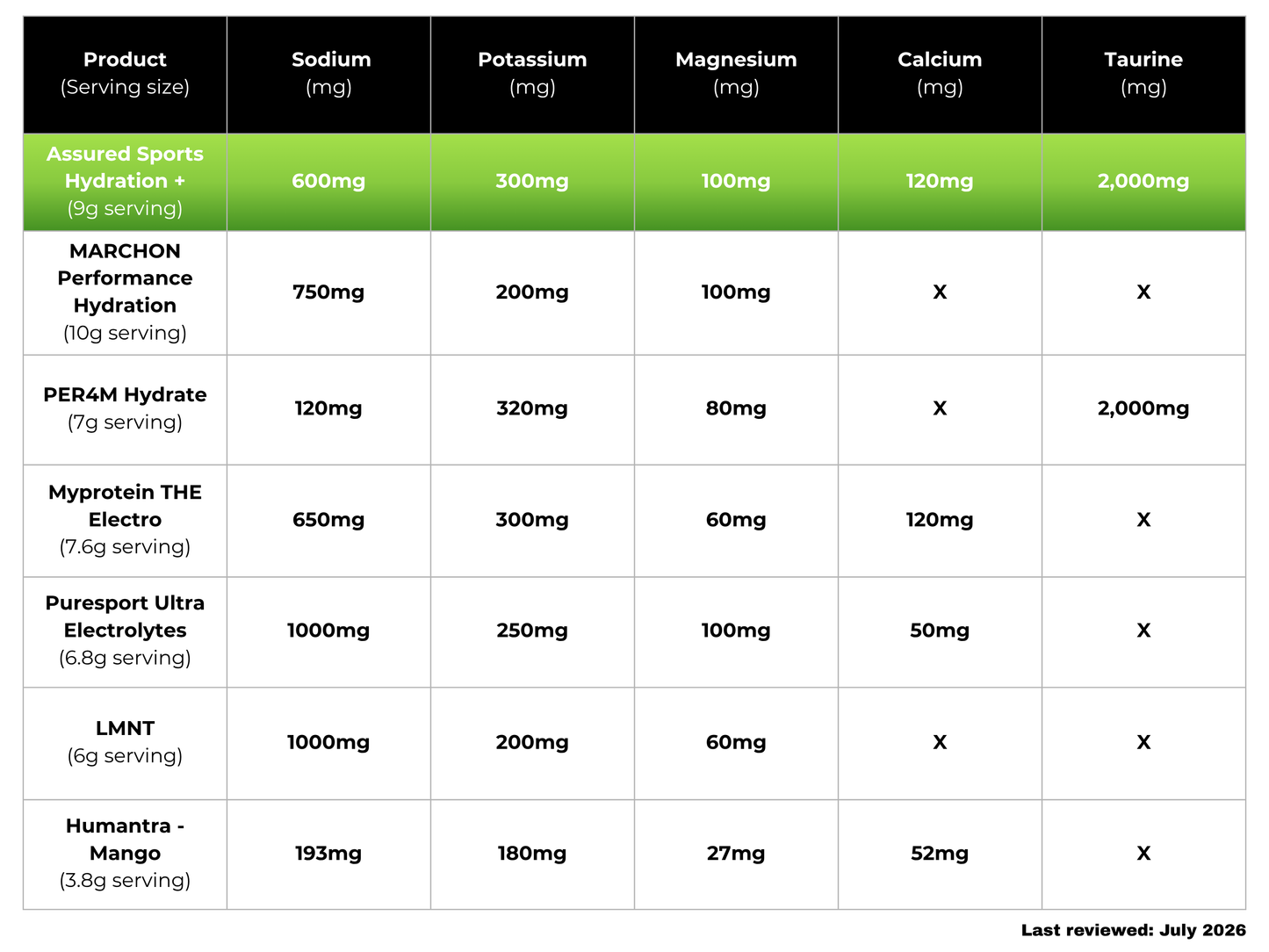
Products can provide very different amounts of sodium per serving. A product containing more sodium is not automatically better, and one containing less is not automatically unsuitable.
The amount should be considered alongside:
- Expected sweat losses
- Run duration
- Temperature and humidity
- Fluid intake
- Sodium obtained from other drinks, foods or supplements
- The time available for recovery
Runners should compare the stated amount per serving rather than assuming all electrolyte products provide a similar sodium dose. [1][2][3]
Carbohydrate content
Some electrolyte products contain meaningful amounts of carbohydrate, while others contain little or none.
Carbohydrate-containing sports drinks can contribute fluid, electrolytes and fuel at the same time. This may be useful during longer or more demanding runs where carbohydrate intake is also part of the plan.
A carbohydrate-free electrolyte product does not provide the same fuelling function. It may be used when:
- The runner does not require carbohydrate during the session
- Carbohydrate is being obtained from gels, chews or food
- The runner wants to manage hydration and fuelling separately
Neither format is automatically better. The choice depends on the complete fuelling strategy rather than the electrolyte label alone. [4][7]
Other electrolytes and additional ingredients
Electrolyte products may also contain potassium, magnesium, calcium and other ingredients. These nutrients have physiological roles, but having more types of electrolytes or additional ingredients does not automatically make a product more suitable for running.
Runners should look at the declared amounts and consider additional ingredients separately rather than assuming they improve hydration simply because they appear in an electrolyte product.
Product format
Electrolytes for running are available as powders, tablets, capsules and ready-to-drink products.
The format can affect:
- Portability
- Access to water
- Ease of preparation
- Ability to adjust the number of servings
- Bottle or flask compatibility
- Practicality during races
- Cost per serving
Product format does not by itself determine the quality of the formula. A runner should consider whether the product can be prepared, carried and consumed realistically during the intended session.
How should runners approach hydration before a run?
Beginning a run in a normally hydrated state is generally more useful than relying on a large amount of fluid immediately before starting.
Normal meals and drinks may be sufficient before many training sessions.
A runner may give additional consideration to fluid and sodium before a session when:
- Previous sweat losses have not yet been fully replaced
- The upcoming run will be prolonged
- Conditions are expected to be hot or humid
- Access to fluid during the run will be limited
- Several sessions or race stages are being completed close together
Drinking excessive fluid before a run is not a substitute for a planned hydration strategy. The aim should be to begin appropriately hydrated without forcing unnecessary fluid. [1][3]
What should runners consider during a run?
During-run needs depend on the length and demands of the session.
For shorter or lower-sweat runs, carrying an electrolyte drink may be unnecessary.
For longer runs and races, runners should consider:
- Expected run duration
- Weather conditions
- Likely sweat losses
- Availability of drinks on the route
- Bottle or flask capacity
- Sodium supplied per serving
- Carbohydrate supplied by drinks, gels or food
- Gastrointestinal comfort
- Opportunities to practise the strategy beforehand
An electrolyte drink should fit the wider hydration and fuelling plan. It should not be considered separately from total fluid and carbohydrate intake.
A runner consuming carbohydrate from gels may prefer a different drink from someone relying on a carbohydrate-electrolyte drink for both fuel and hydration.
The chosen strategy should be tested during suitable training sessions before being used in competition. [1][3][4][7]
What should runners consider after a run?
Post-run hydration needs depend on the amount lost and the time available before the next demanding session.
Normal meals and drinks may be sufficient after a lower-sweat run when the runner has several hours to recover.
A more deliberate rehydration strategy may become relevant when:
- Body-mass changes suggest meaningful sweat loss
- The run took place in hot conditions
- The runner sweated heavily
- Another session or race is scheduled soon
- Normal meals and drinks will be delayed
Sodium can be obtained from an electrolyte drink or from food eaten alongside fluid.
Following meaningful exercise-induced dehydration, sodium-containing drinks can support greater fluid retention than plain water under some conditions. The outcome also depends on the amount of fluid consumed, food intake and the length of the recovery period. [1][8]
Does a higher-sodium product always suit runners better?
No.
The most suitable sodium amount depends on the runner, the run and the wider nutrition strategy.
A higher-sodium product may be more relevant where sweat and sodium losses are substantial. It may provide more than is required for a shorter, cooler or lower-sweat session.
A lower-sodium product may be adequate in some circumstances but may replace only a small proportion of losses during a prolonged, high-sweat run.
The purpose of comparing products is therefore not to identify the highest number. It is to identify whether the declared amount, serving size and mixing instructions fit the expected demands of the session.
Electrolytes also do not make excessive fluid intake safe. Runners should avoid treating the presence of sodium as permission to drink beyond their needs. [1][2][3]
How should a runner test an electrolyte product?
A new hydration product or strategy should be tested during training rather than introduced for the first time on race day.
The runner should assess:
- Whether the product mixes properly in the intended bottle
- Whether the taste remains acceptable during exercise
- Whether the planned concentration is comfortable to consume
- How easy it is to carry or obtain during the run
- How it fits alongside gels, food and other drinks
- The total fluid, sodium and carbohydrate supplied by the full plan
- Whether the same approach remains practical in warmer conditions
Testing does not guarantee that every race will produce the same outcome. It helps the runner identify practical problems and make informed adjustments before competition. [3][4]
Where does Hydration+ fit?
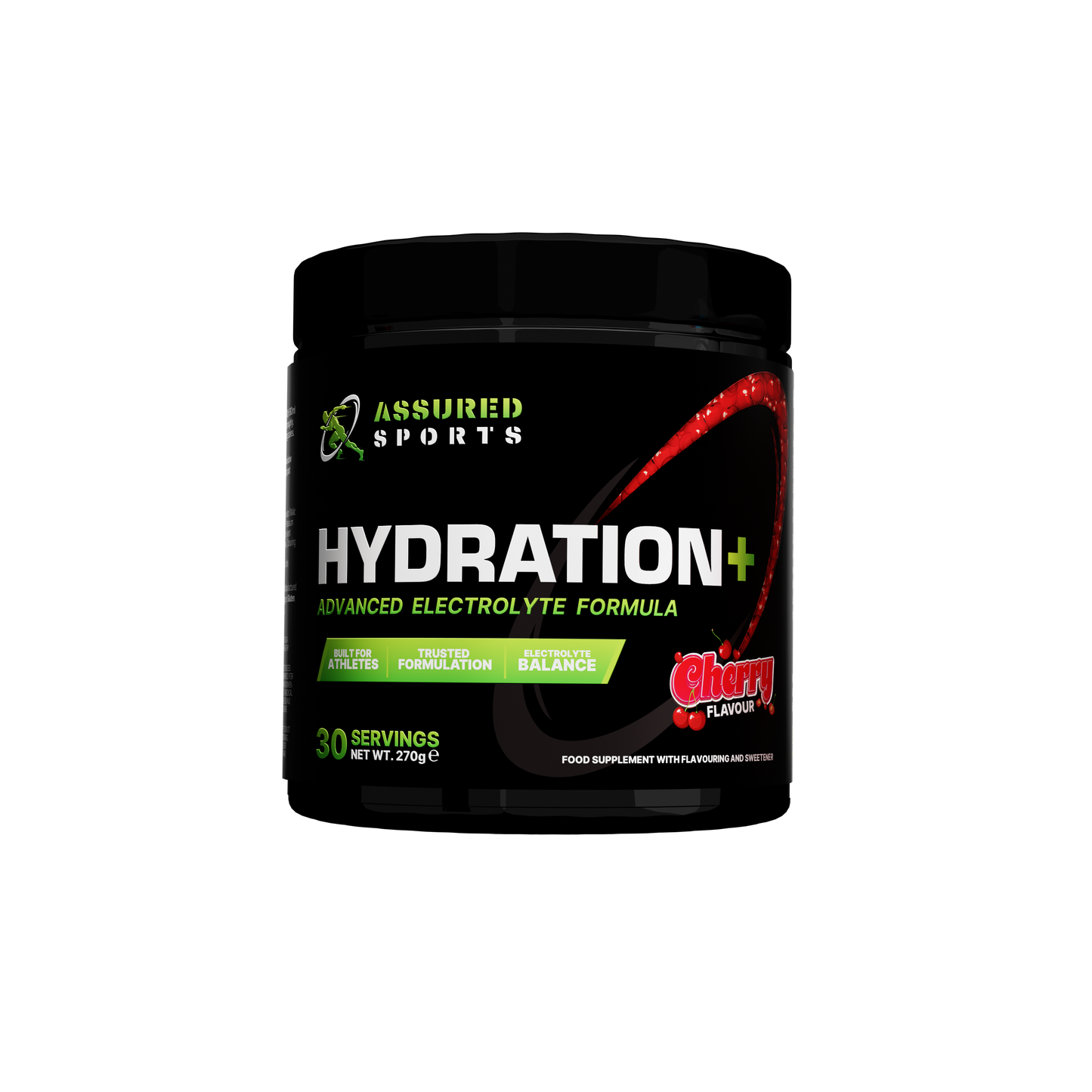
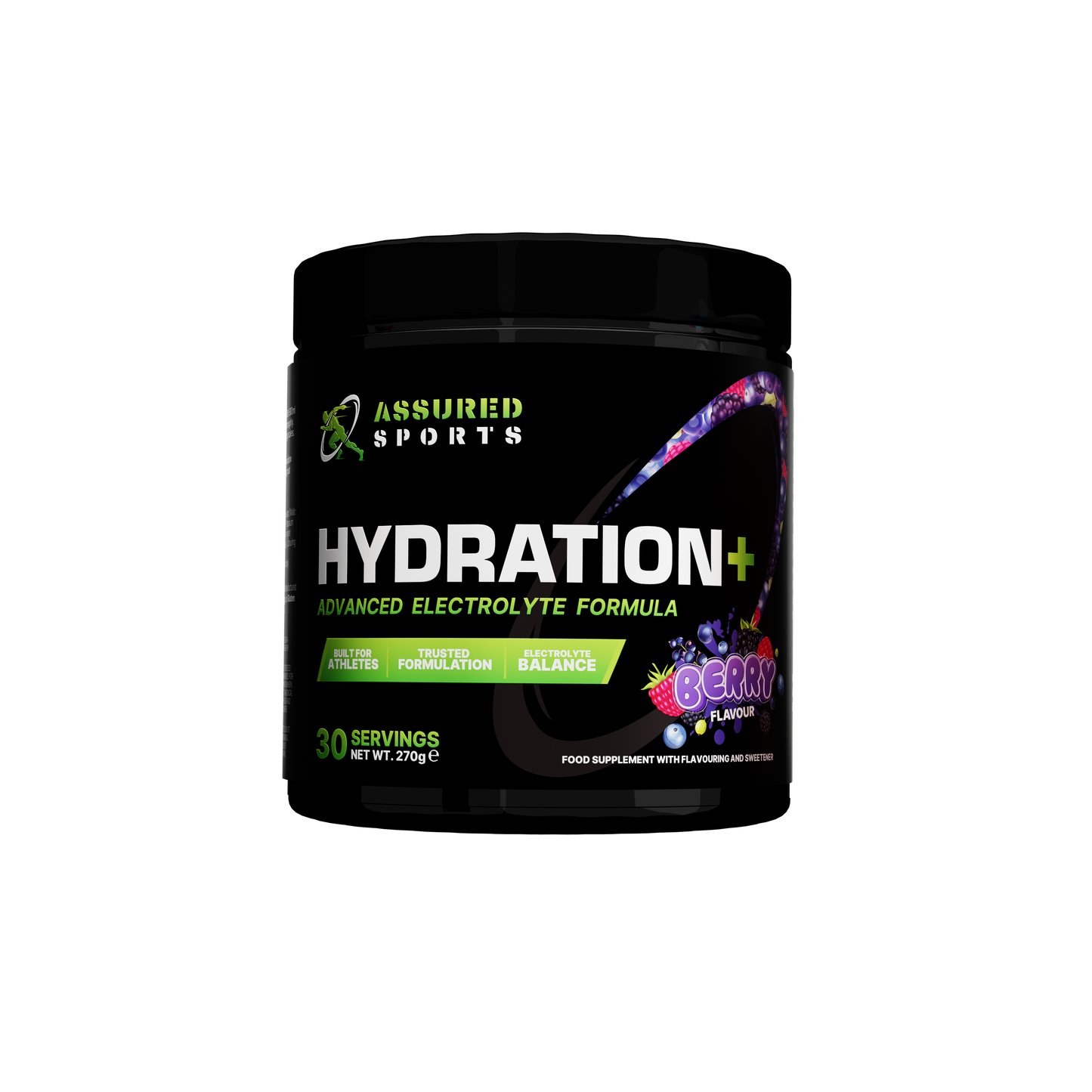
Assured Sports Hydration+ is a powdered electrolyte supplement designed to be mixed with water.
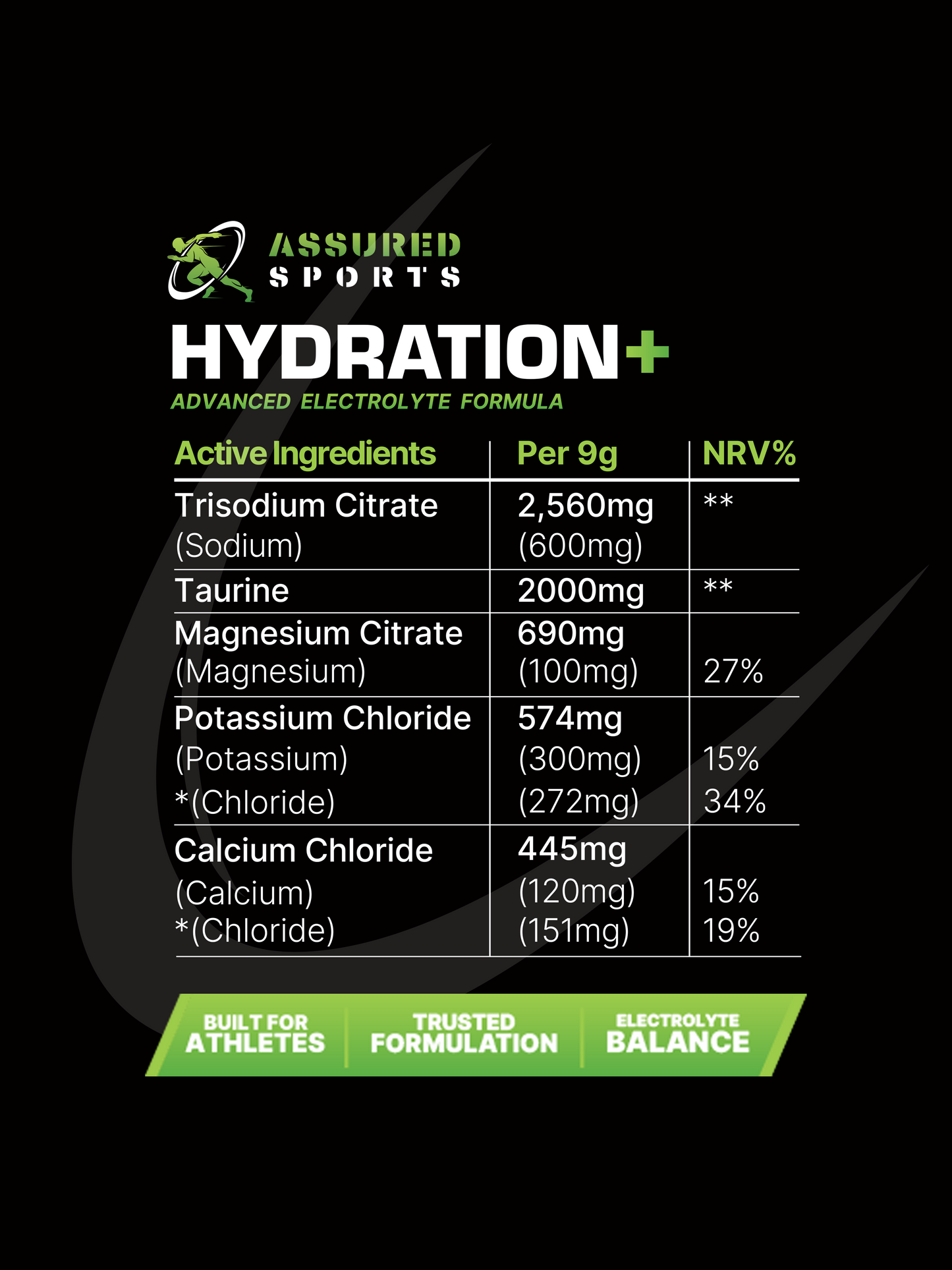
Each 9 g serving provides:
- 600 mg sodium
- 300 mg potassium
- 100 mg magnesium
- 120 mg calcium
- 2,000 mg taurine
Taurine is included as an additional ingredient and is not itself an electrolyte.
For runners, the 600 mg sodium amount should be considered alongside the intended water volume, expected sweat losses, run duration, weather conditions and sodium obtained from other foods, drinks or supplements.
Hydration+ should not be treated as an exact replacement target for every runner or session. It may be more relevant around prolonged, warm, high-sweat or repeated running sessions where fluid and electrolyte replacement requires greater consideration.
It is not necessary for every run and does not remove the need to consume sufficient fluid. Runners completing longer sessions should also consider whether carbohydrate is required and where that carbohydrate will come from.
View Assured Sports Hydration+
Key takeaways
- Not every run requires an electrolyte product.
- Duration, conditions, sweat losses and recovery demands can be more informative than distance alone.
- Sodium per serving should be compared alongside the intended water volume.
- Products with more sodium are not automatically more suitable for every runner.
- Carbohydrate-containing sports drinks and electrolyte products do not always serve the same purpose.
- Product format should suit the runner's bottles, route, race access and wider fuelling plan.
- Normal meals and drinks may be sufficient after lower-sweat runs when recovery time is not restricted.
- A hydration and fuelling strategy should be tested during training before being used in a race.
- Electrolytes do not make excessive fluid intake safe.
Related guides
For a basic explanation of the main electrolytes, read:
For more detail on fluid balance and rehydration, read:
How Do Electrolytes Help With Hydration?
For a closer look at sweat sodium losses and sodium replacement, read:
Sources
- McDermott BP, Anderson SA, Armstrong LE, et al. National Athletic Trainers’ Association Position Statement: Fluid Replacement for the Physically Active. Journal of Athletic Training. 2017;52(9):877–895.
- Baker LB. Sweating Rate and Sweat Sodium Concentration in Athletes: A Review of Methodology and Intra/Interindividual Variability. Sports Medicine. 2017;47(Suppl 1):111–128.
- Casa DJ, Cheuvront SN, Galloway SD and Shirreffs SM. Fluid Needs for Training, Competition, and Recovery in Track-and-Field Athletes. International Journal of Sport Nutrition and Exercise Metabolism. 2019;29(2):175–180.
- Burke LM, Jeukendrup AE, Jones AM and Mooses M. Contemporary Nutrition Strategies to Optimize Performance in Distance Runners and Race Walkers. International Journal of Sport Nutrition and Exercise Metabolism. 2019;29(2):117–129.
- Racinais S, Alonso JM, Coutts AJ, et al. Consensus Recommendations on Training and Competing in the Heat. Scandinavian Journal of Medicine & Science in Sports. 2015;25(Suppl 1):6–19.
- Surapongchai J, Saengsirisuwan V, Rollo I, Randell RK, Nithitsuttibuta K, Sainiyom P, Leow CHW and Lee JKW. Hydration Status, Fluid Intake, Sweat Rate, and Sweat Sodium Concentration in Recreational Tropical Native Runners. Nutrients. 2021;13(4):1374.
- Sawka MN, Burke LM, Eichner ER, Maughan RJ, Montain SJ and Stachenfeld NS. American College of Sports Medicine Position Stand: Exercise and Fluid Replacement. Medicine & Science in Sports & Exercise. 2007;39(2):377–390.
- Shirreffs SM, Taylor AJ, Leiper JB and Maughan RJ. Post-Exercise Rehydration in Man: Effects of Volume Consumed and Drink Sodium Content. Medicine & Science in Sports & Exercise. 1996;28(10):1260–1271.